
Need help? Talk to an expert
Need help? Talk to an expert
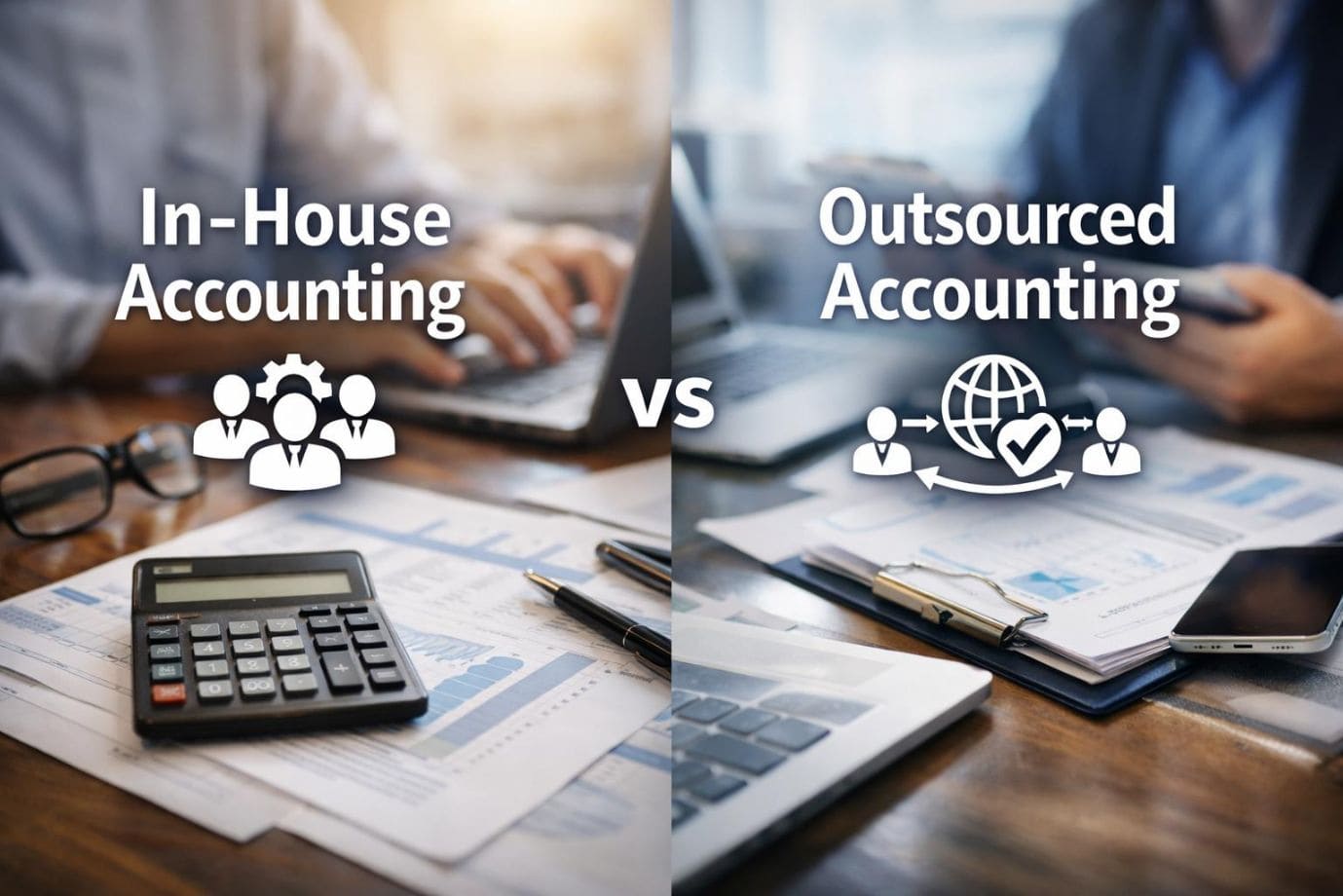
As businesses grow, financial management becomes increasingly important for maintaining profitability, compliance, and operational control. One of the most common decisions business owners face is whether to build an internal accounting team or partner with an external accounting provider.
There is no universal answer because every business has different growth goals, operational complexity, budgets, and reporting requirements.
Choosing the right accounting model can influence financial visibility, decision-making speed, compliance quality, and overall business efficiency.
At AVGA Consultants, we work with startups, SMEs, and growing enterprises to help them design accounting structures that align with business objectives and long-term scalability.
Accounting is no longer limited to recording transactions and preparing reports.
Modern financial management supports:
The right accounting setup creates stronger financial discipline and better visibility across the organization.
Before selecting an accounting model, business owners should evaluate operational needs, cost implications, and future expansion plans.
In-house accounting refers to maintaining an internal finance team responsible for day-to-day accounting operations.
Typical responsibilities include:
The business retains direct control over financial activities.
Internal teams provide immediate access to financial information and approvals.
Departments can coordinate directly with finance teams.
Dedicated employees gain deeper familiarity with business workflows.
Internal teams can create highly tailored reports.
For smaller businesses, maintaining a full accounting department may become expensive.
Outsourced accounting involves engaging an external team or advisory firm to manage financial operations.
Businesses receive specialized expertise without building large internal teams.
Businesses avoid full-time hiring and infrastructure costs.
External professionals often bring experience across industries.
Services can expand as business requirements evolve.
Outsourced providers frequently use modern accounting systems and reporting tools.
Selecting the right service provider becomes critical.
Cost evaluation should extend beyond salary expenses.
Many growing businesses discover that external support provides stronger value during expansion phases.
Evaluate the following categories before making a decision.
Smaller businesses may prioritize flexibility and cost management.
Larger organizations may require dedicated internal resources.
Complex operations often benefit from broader specialist support.
Rapid growth frequently increases reporting and compliance requirements.
Financial planning should balance capability and cost efficiency.
Digital reporting and automation expectations may influence the preferred model.
An internal accounting structure may fit businesses that:
Organizations with established scale often prefer direct operational control.
Startups and SMEs often benefit from specialized support without increasing fixed overhead.
Many companies are combining internal teams with external accounting expertise.
This model creates operational flexibility while maintaining financial control.
Avoid these decision-making errors.
Short-term savings may create long-term inefficiencies.
Business expansion changes accounting needs.
Clear workflows improve any accounting structure.
Financial visibility should remain a priority.
Choosing the ideal accounting model requires balancing efficiency, compliance, and business goals.
AVGA Consultants supports businesses through:
Our approach helps organizations build scalable accounting systems that support sustainable growth.
The choice between internal accounting and outsourced support depends on your business stage, operational complexity, growth plans, and financial priorities.
Businesses that evaluate long-term efficiency instead of short-term convenience are better positioned to build stronger financial foundations.
Selecting the right accounting structure today can improve reporting quality, enhance decisionmaking, and support future business success.